



Is Vegan Skincare Better for Your Skin? What It Can (and Can't) Do
by Nizma Skincare on Dec 12, 2022

By the Nizma Skincare team · Updated November 2026
Short answer: vegan skincare isn't automatically better for your skin, but well-formulated plant-based products can be just as effective as any others, and many people prefer them for ethical reasons. What matters most is the formula: proven ingredients, gentle on your skin, and suited to your concerns.
Key takeaways
- Vegan means no animal ingredients, not automatically better.
- The formula matters more than the label.
- Gentle products matter most on melanin-rich skin.
In this guide
- What "vegan skincare" actually means
- The real benefits of plant-based skincare
- Myths to ignore
- Why gentle matters more on melanin-rich skin
- How to choose a good vegan product
- Frequently asked questions
- Shop the products in this guide

What "vegan skincare" actually means
A vegan product contains no animal-derived ingredients, such as beeswax, lanolin (from sheep's wool), carmine (from insects), collagen or honey. It says nothing on its own about whether a product was tested on animals; that's what "cruelty-free" means. We explain the difference in vegan vs cruelty-free: what's the difference?
The real benefits of plant-based skincare
- Effective plant actives. Many of today's most useful ingredients come from plants: green tea, aloe, resveratrol, jojoba and plant-derived alpha-arbutin.
- Kinder to animals. No animal ingredients, and at Nizma, no animal testing.
- Easy to read labels. You know exactly what you're avoiding.
Myths to ignore
"Vegan means chemical-free"
Everything, including water and plant extracts, is made of chemicals. "Natural" doesn't automatically mean gentle, and "synthetic" doesn't mean harmful. Some plant extracts and essential oils can irritate sensitive skin.
"Animal ingredients clog pores"
Whether a product clogs pores depends on the specific formula, not on whether ingredients come from plants or animals.
"Plant-based products don't work"
Vitamin C, niacinamide, hyaluronic acid and alpha-arbutin can all be made without animal ingredients and work just as well. See the 4 skincare ingredients that actually work.
Why gentle matters more on melanin-rich skin
On darker skin tones, irritation and inflammation can leave dark marks behind, a condition called post-inflammatory hyperpigmentation. The American Academy of Dermatology recommends gentler products for people prone to dark spots (AAD). That's why we formulate with skin like yours in mind. Learn more in how to fade dark spots on dark skin.
How to choose a good vegan product
- Look for proven actives, not just "natural" claims.
- Check for both vegan and cruelty-free statements.
- Patch test new products on a small area for a few days.
- Choose products made for your concern: dullness, dark spots, dryness or oil.
Frequently asked questions
Is vegan skincare good for sensitive skin?
It can be, but it depends on the formula. Some plant extracts and fragrances can still irritate. Patch test first.
Is vegan skincare the same as organic?
No. Organic refers to how ingredients were farmed. Vegan means there are no animal-derived ingredients.
Is Nizma Skincare vegan and cruelty-free?
Yes. Every Nizma product is plant-based, vegan and cruelty-free.
Shop the products in this guide
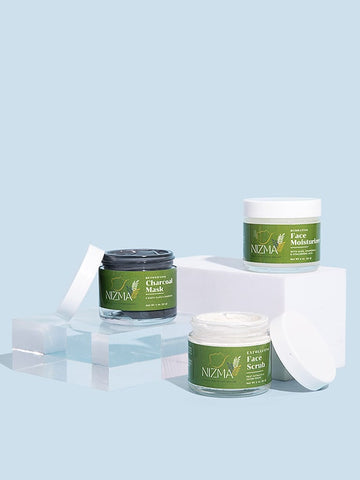
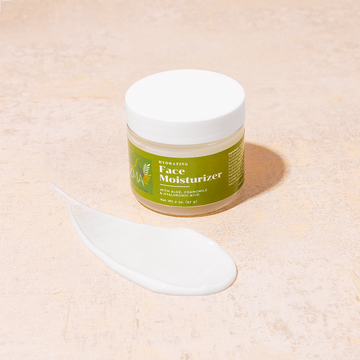
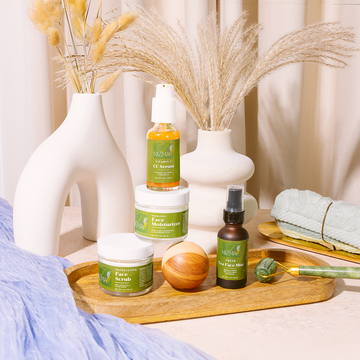
Brightening Face Serum · CC Serum with Vitamin C · Hydrating Face Moisturizer
Every Nizma product is plant-based, vegan and cruelty-free, and made with melanin-rich skin in mind. Prefer to start with a routine? Browse our Nizma skincare sets.
Keep reading
- Vegan vs cruelty-free: what's the difference?
- 4 skincare ingredients that actually work
- Skincare routine order
This article is for general education and isn't medical advice. If dark spots are spreading, itchy, painful or don't improve after several months, see a board-certified dermatologist.


