



Vegan vs Cruelty-Free Skincare: What's the Difference and Why Switch?
by Nizma Skincare on Dec 12, 2022

By the Nizma Skincare team · Updated November 2026
Short answer: vegan means a product contains no animal-derived ingredients. Cruelty-free means neither the product nor its ingredients were tested on animals. A product can be one without the other, so if both matter to you, check for both on the label.
Key takeaways
- Vegan is about ingredients; cruelty-free is about testing.
- Check labels for both.
- Avoid anything that irritates; irritation causes dark marks.
In this guide
- Vegan vs cruelty-free at a glance
- Common animal-derived ingredients to look out for
- Skincare habits to avoid if you're prone to dark spots
- Is there a gentler alternative to benzoyl peroxide?
- How to switch to vegan skincare, step by step
- Frequently asked questions
- Shop the products in this guide

Vegan vs cruelty-free at a glance
| Vegan | Cruelty-free | |
|---|---|---|
| What it covers | Ingredients | Testing |
| Means | No animal-derived ingredients | No animal testing |
| Can it still be tested on animals? | Yes, unless also cruelty-free | No |
Nizma Skincare is both: plant-based, vegan and cruelty-free.
Common animal-derived ingredients to look out for
- Lanolin: from sheep's wool, common in balms and moisturizers.
- Beeswax and honey: in lip balms and cleansers.
- Carmine: a red pigment made from insects.
- Collagen and keratin: usually from animal sources.
- Squalene: sometimes from shark liver. Plant-derived squalane is the vegan alternative.
Skincare habits to avoid if you're prone to dark spots
If you have melanin-rich skin, anything that irritates it can leave marks behind. Be careful with:
- Very harsh scrubs used daily, or scrubbing hard.
- Stacking several strong acids or retinoids at once.
- Strong spot treatments that leave skin red, dry or peeling.
- Skipping sunscreen, the biggest reason dark spots linger.
Is there a gentler alternative to benzoyl peroxide?
Benzoyl peroxide is an effective acne treatment, but it can cause dryness and irritation, especially at higher strengths. If it irritates your skin, talk to a dermatologist about options. To fade the marks acne leaves behind, gentle brighteners like alpha-arbutin, vitamin C and niacinamide are a good fit. Our Brightening Face Serum and Fresh Tea Face Mist are made for exactly that step. Read how to fade dark spots on dark skin for the full plan.
How to switch to vegan skincare, step by step
- Don't throw everything out. Replace products as they run out.
- Start with the basics: cleanser, moisturizer, sunscreen.
- Add one treatment at a time, such as a vitamin C or brightening serum, and give it a few weeks.
- Patch test each new product.
Want a ready-made routine? Our Daily Regimen Set covers cleanse-to-glow in four steps. See the right order to apply your skincare.
Frequently asked questions
Can a product be cruelty-free but not vegan?
Yes. It may not be tested on animals but still contain ingredients like beeswax or lanolin.
Is vegan skincare better for the environment?
It often avoids some animal-farming impacts, but packaging and sourcing matter too. Look at the whole brand.
What should I avoid in skincare if I have dark spots?
Avoid anything that leaves your skin irritated, and never skip sunscreen. Irritation can trigger new dark marks on melanin-rich skin.
Shop the products in this guide
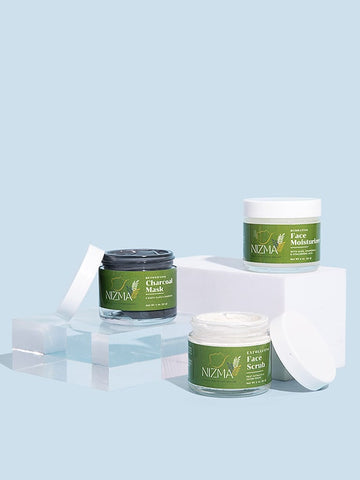
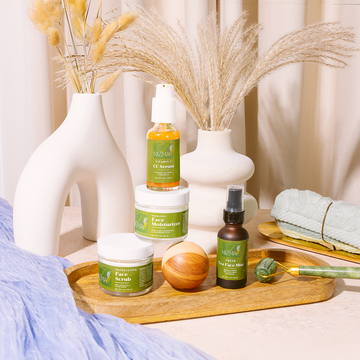
Daily Regimen Set · Brightening Face Serum · Fresh Tea Face Mist · CC Serum with Vitamin C
Every Nizma product is plant-based, vegan and cruelty-free, and made with melanin-rich skin in mind. Prefer to start with a routine? Browse our Nizma skincare sets.
Keep reading
- Is vegan skincare better for your skin?
- How to fade dark spots on dark skin
- 4 skincare ingredients that actually work
This article is for general education and isn't medical advice. If dark spots are spreading, itchy, painful or don't improve after several months, see a board-certified dermatologist.


